Hope McConnell
Solo
Early inspiration from Mercer Mayer books and a steady supply of craft materials from the grandparents set Hope on a journey of joyous illustration. Mix that in with a dream job for Dilmah tea and how her work can never be replaced by the AI robots.
I come from a very rich background of design and creative people — my mum was an oil painter and graphic artist. Until I was about 10, she did that as a job and really encouraged me. My dad loves poetry and sculpture, and they were always taking us to exhibits and collecting art throughout the years. My nana was an oil painter and florist, and my grandma did a lot of sewing, so I was basically predestined for this.
We didn’t watch much TV growing up as we just had so much craft everywhere, and I was always cooking in the kitchen with my mum. She would paint murals throughout our house: she painted an old-school sun-and-solar system with faces and everything on the roof and the walls, and in our bedroom she painted beach scenes, making our cupboards look like tropical beach huts. She just taught me to always be making and creating things.
:quality(82)/media/IMG_9829.jpg)
I had this beautiful children’s book, Beauty and the Beast, by Marianna Mayer and illustrated by Mercer Mayer, painted in really detailed watercolours, and it was my favourite thing ever. My grandparents lived in the States, and whenever they’d visit they’d bring us stacks of Tintin and Calvin and Hobbes comic books and huge box sets of pencils, ink pens, and really extravagant craft supplies.
:quality(82)/media/calvin.jpg)
:quality(82)/media/tintin.png)
:quality(82)/media/mercer.png)
:quality(82)/media/beautyandbeast.jpg)
I went to a small rural primary school in Hamilton, which was very outdoorsy. We then moved to Tauranga when I was 10, and I had a teacher, Carol Burborough, who recognised my creativity and was super encouraging. I did a Portrait of a Māori Woman back then and gave one to her — I reconnected with her recently, and she still has it in her office today.
At intermediate school, I was into sewing and fashion, and we went to San Francisco to see a Yves Saint Laurent exhibition that completely blew my mind. I had a teacher in the sewing and fashion department, Miss Young, who was a real mentor to me, too.
I’ve had multiple awesome women who’ve really taken me under their wing and helped push me. All of them were a bit tough on me, too, encouraging me not to slouch and to push myself and try as hard as I could. My high-school design teacher was probably my biggest influence: Megan Johnston. She helped me see that illustration was actually a career, as I had no idea it could be a job — it was just fun for me. By the end of high school, I was basically spending all my time in the art and fashion departments.
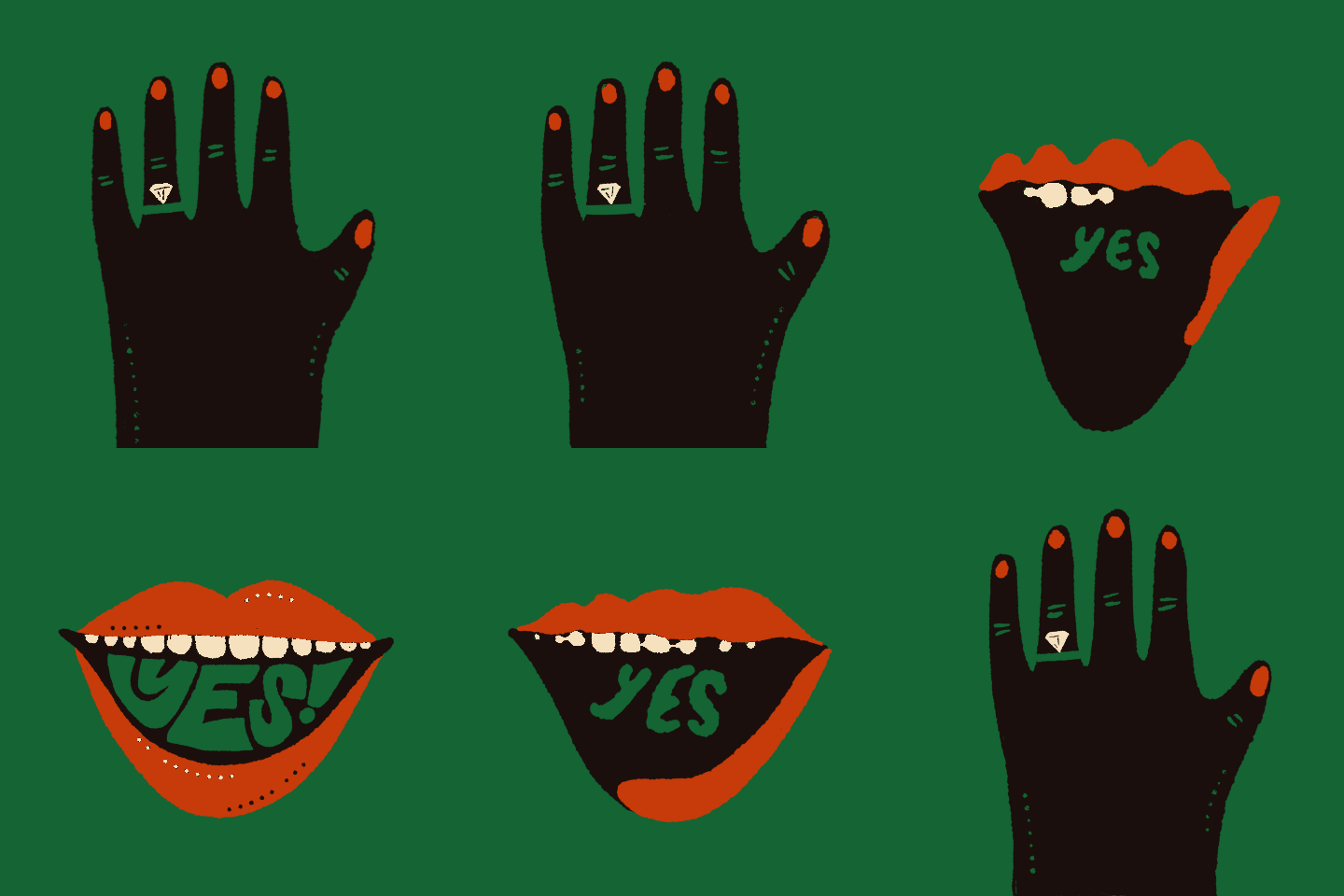
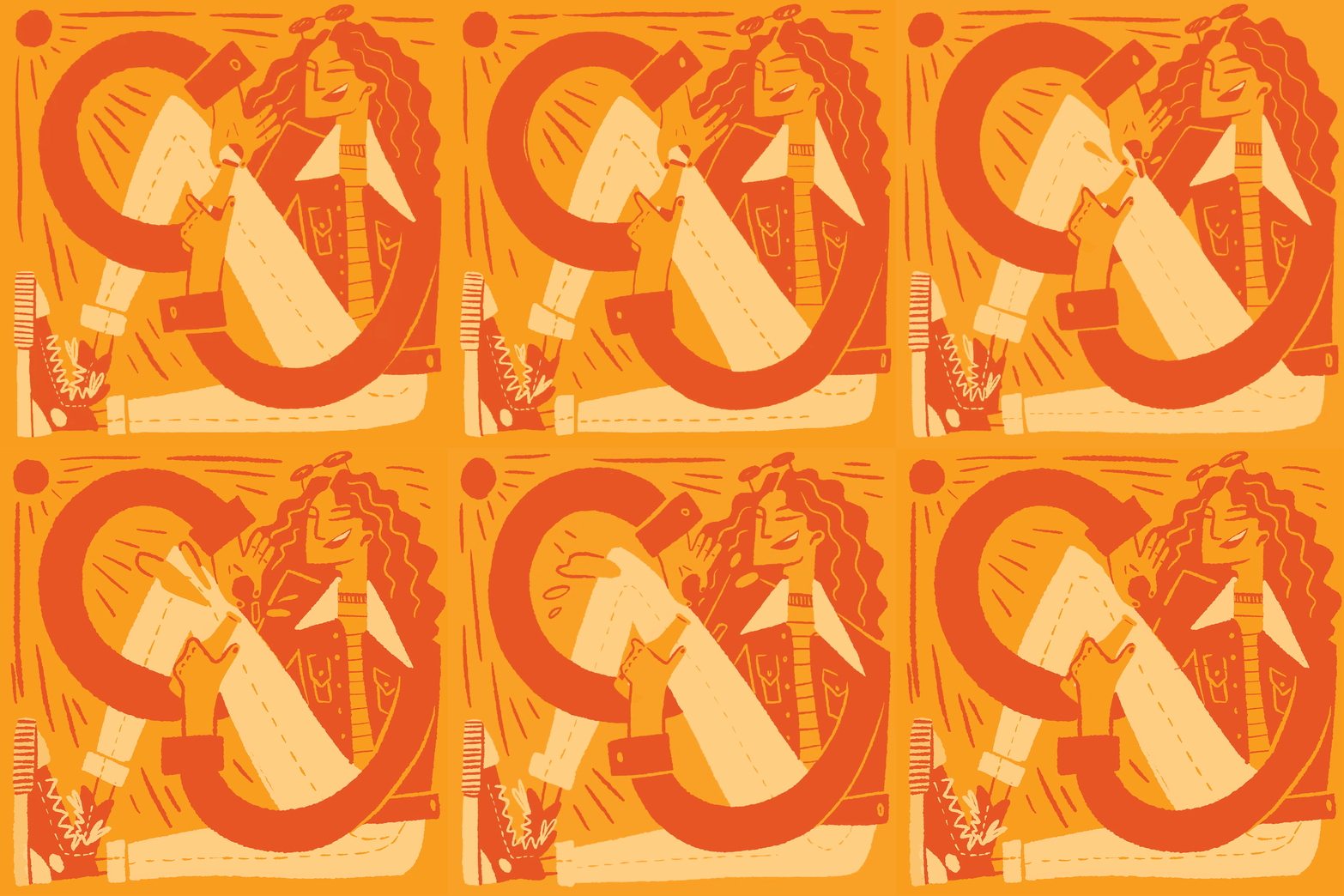
Yeah, totally. When I was considering university, I was torn between fashion and design. I visited the AUT fashion department, and it felt quite black-and-white back then; everybody looked like they hadn’t slept in a week. There was lots of mechanical equipment everywhere, and it wasn’t what I thought it would be — like Project Runway— and didn’t feel that exciting to me.
Then I went next door to the design department, and there were people sitting around tables collaborating. There was stuff all over the walls, people making books, printmaking, and it was like paradise. I’m not really someone who likes to be on my own little island. I think in hindsight there’s room in my life to combine fashion and design, but at that time I just wanted to feel free to explore and create.
:quality(82)/media/healthgroup.png)
:quality(82)/media/healthguy.png)
Definitely. It’s more my natural skill, but I also loved design, the theory behind design, and was really interested in branding and typography, too — I’ve always wanted to have a foot in both camps.
I did get good grades for the most part, but I think working really hard was the most important thing. I was always there, always pushing myself, always handing in too much work, doing more concepts than necessary, and I wanted to suck the marrow out of it all.
I remember being at uni and thinking I was going to leave and skyrocket to design stardom. Especially if you’re told that you’re doing well, you just assume that’s what would happen — and it totally was not that for me. It was unrealistic and actually really hard on my mental health at the time.
:quality(82)/media/britomart.jpg)
:quality(82)/media/pamshope.jpg)
In my third year I connected with a few different people, and volunteering for Semi Permanent was an amazing experience. I got to meet a lot of people through that, and from there I’ve always been a bit of an annoyance — just asking people if they wanted to go for a coffee.
I’ve never really been afraid of reaching out, I suppose, and I think that would be one of my biggest pieces of advice: you have to ignore the imposter syndrome and just talk to people. People in New Zealand are generally lovely; everybody is just super approachable and really wants you to succeed. You just have to be proactive — people will see that you care, and they will invest in you.
:quality(82)/media/semi.jpg)
Yep. When I say people are welcoming, it doesn’t mean that you’ll get a job straight away. Just because people want you to do well and are encouraging doesn’t mean that you’re also going to be the right fit for them at that time, especially in an agency — which was something I didn’t really understand at the time.
It was difficult with people always letting me know that they thought my work was good, but I just wasn’t the right fit for anyone at that time, and I didn’t land any jobs in Auckland. I was applying for overseas internships as well through AUT, and I would get to being among the last two or three candidates, only to have the door closed every time. It was so frustrating: lecturers telling me I’m good, that I’m getting to these last interviews, meeting up with people for coffee, hearing that my work is great, but then no one’s actually got a job for me.
You really just have to be persistent and understand that it’s not always you: it’s about timing. Just because it’s a no right now, it doesn’t mean it’s always going to be a no.
:quality(82)/media/laffare1.jpg)
:quality(82)/media/laffarefire.webp)
I was well equipped to think like a designer and create designs and illustrations. I was technically good, but in terms of client briefs, restrictions on work, and time management: no. At uni the sky’s the limit in terms of time and freedom; then you go to work in a studio doing annual reports or branding, and clients are really specific about what they want — there are just way more parameters.
I freelanced a bit, and I had no idea what I was doing in terms of the business side: how to mark up jobs, how to reach out to clients appropriately, invoicing, usage rights, and determining the value of what I was creating. I did logos for $200, and I didn’t realise I had to pay tax. I thought someone told me that unless you get above a certain amount, you don’t have to pay tax, so I had to back-pay about two years of provisional tax from freelancing when I went out, and I thought ‘Why did no one tell me this before?’
Back then, I spent so much time emailing, quoting, chatting with clients, and getting briefs — even understanding how to question a client to get a proper brief out of them was huge. Now I know that I need them to send me not only references of stuff they like, but also to go to my website and send me examples of things I’ve done that they like. Because if you’re not sending me anything that I’ve done before that you like, then I’m not the right person for you.
After the first year after uni, I actually started working at a church part-time because I didn’t have enough design work. I was contracting with a couple of different local studios, working for a month at a time, and also for Metro Marketing. I felt like I’d been on this trajectory since primary school: levelling up, getting awards, going to uni, leading a bunch of projects — and then I sort of crashed and burned. I really thought it was going to go differently for me.
I ended up back at home, living with my nana and doing a few creative things, and it was a real step back for me. It was Quite a rough time, but it was good because it humbled me. It’s easy to feel like you’re a bit of a hot shot sometimes, but just because you’re good doesn’t mean that other people aren’t good, too. I’m glad it happened, but at the time it was really tough.
It was not so much that I was ready to give it up, but it was just not what I thought it would be. I’m not in New York at a huge agency; I’m just back at home, so I’m going to embrace the stage of life that I’m in. I still got some pretty great jobs, and got to work with Michelle Crook, who’s a marketing specialist here in the Bay of Plenty. She mentored me through a lot of that time.
There was a job that came up at a local studio, and I applied along with 80 other applicants. It was quite a fluke because I went to offer freelance support, and they offered me an interview on the spot for a full-time role, which I got. It was super small: just four of us doing mostly corporate design work. One of our main clients was Zespri, and we were basically their dedicated in-house design team
I got to do a bit of illustration through that, but it was very corporate, and I stayed about 18 months.
I then had some personal stuff happen, and on reflection my creative journey has also been a mental health journey in many ways. In the end it wasn’t really a healthy work environment for me, and I had to take some time off to recoup. It was the start of 2021, and I had reached a point where I believed that if this didn’t work out then God had other plans for me and I’d let it go. I was just going to give it one more hearty push.
I was listening to heaps of podcasts, watching YouTube, and consuming lots of business content, and decided to go out on my own at the start of 2021. I gave myself three months to create personal work — a portfolio, website, business cards — and tried to get everything lined up. I set up at a shared working space and got to work cold-emailing every studio I could think of in New Zealand, along with sending physical postcards, and pretty quickly started getting work.
One of the first projects was through Brother Design for Pams. I was like ‘Oh my gosh, Pams thinks I’m an artist — I can do this!’ It was the confidence boost I needed. I also reached out to Rob Finn at International Rescue, as I felt like I had a bit behind me at that point, and signed with him as well to represent me, which was a huge push for my career. And it was fortunate timing, too, as it was mid-COVID and illustration was highly sought after since no one could really take photos of people, and they needed illustrators.
I then met with Claire [Gilbert-Choe] and Ezra [Whittaker] from Daylight, who had just started the agency. Toby Morris, whom I had connected with at uni, worked with them and had passed on my name. They wanted a huge vaccine education project done, and it was probably six months of solid illustration and working alongside some very talented animators. Daylight have come into their own and fully found their niche — they’re so amazing.
:quality(82)/media/vaccine.png)
:quality(82)/media/toby.png)
:quality(82)/media/pams.png)
They were definitely pivotal moments, but the biggest one for me was probably the Dilmah job. It was a dream to work with such a big brand on a long-format project. I just got some really awesome gigs early on, and I know that’s not super common, but I was super aggressive about it (in a positive way), reaching out to people all the time. I don’t think I’m the best illustrator, but I’ve definitely made a point of putting my work in front of everyone, and I think that pays off eventually.
Growing up seeing my parents run a business was good for me, as my mum is a real go-getter, and watching her taught me a lot about pursuing opportunities and networking. I’m not an introvert, though I think many artists are, so I can understand why it’s hard for people to put themselves out there. It’s a middle ground for me, which has always made it interesting finding my fit. Being able to listen is huge, as is getting rid of the ego.
We then travelled for a bit, as I have always loved European culture, fashion and art, so we took 18 months off to see the world and live somewhere new.
We lived in Amsterdam for 11 months, travelled around a bit, and then came back home. I don’t think Amsterdam was the best choice for my career, and in hindsight I think London would have been better, but I made a lot of connections there through reaching out and networking with a bunch of agencies. I worked in a packaging studio and learned a lot about the technical side, which was awesome, but I think I just love the freedom of creativity that I get from freelancing. People come to me because of what I put out there, so I don’t have to do much of the corporate stuff; I just get to make work that’s beautiful and joyful.
:quality(82)/media/dilmahworld.webp)
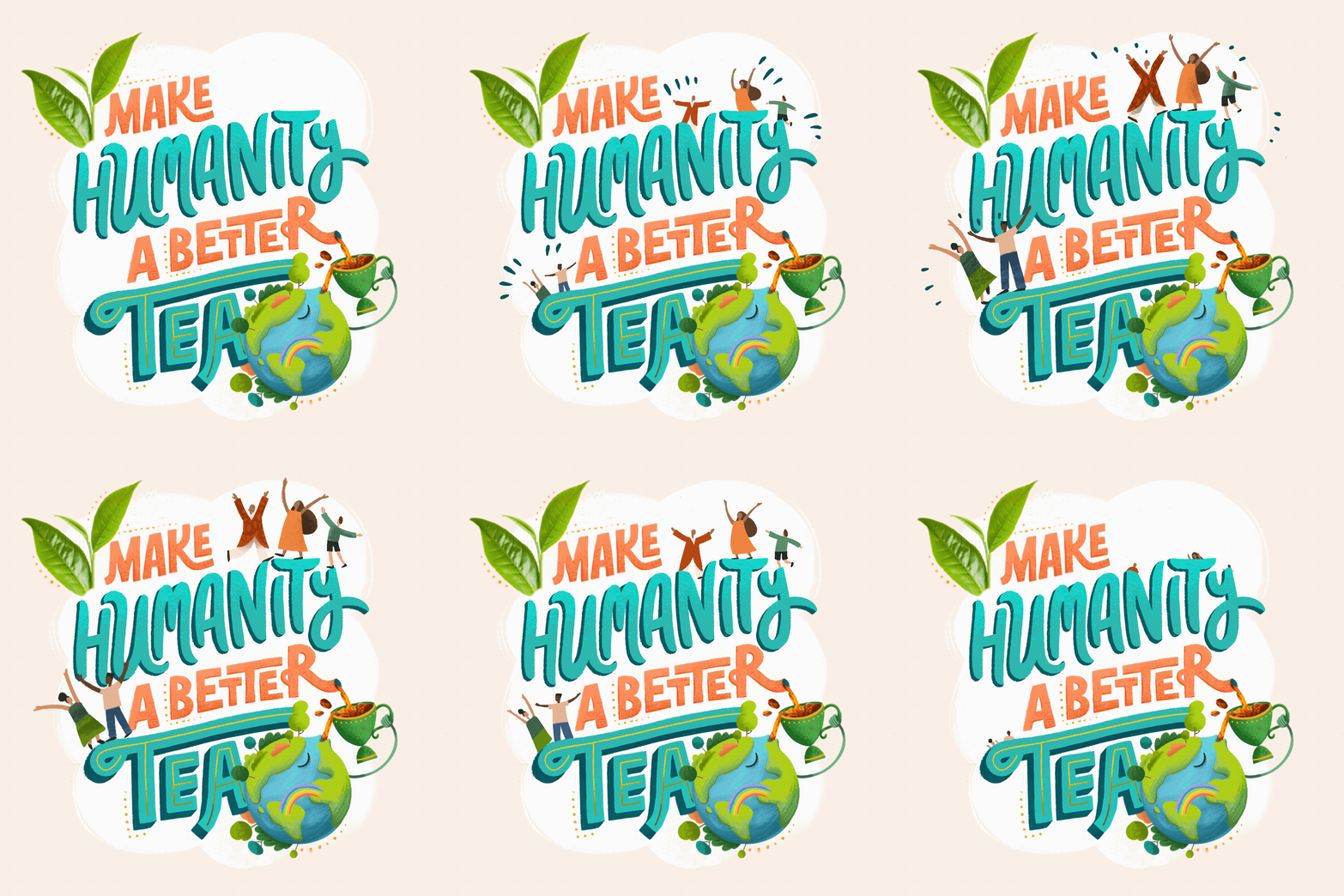
I think people are too quick to jump on a negativity bandwagon these days. There’s obviously a lot of issues on which we have differing opinions, but I think we forget that every person is human. It’s my responsibility to do the best that I can, and I strive for connection and common ground rather than division and anger. As creatives, we’re so well positioned to be the people who tell stories in an empathetic way and help people see things from different perspectives.
How does this project benefit someone? How can I make this a beautiful thing that brings a bit of joy to someone when they interact with it?
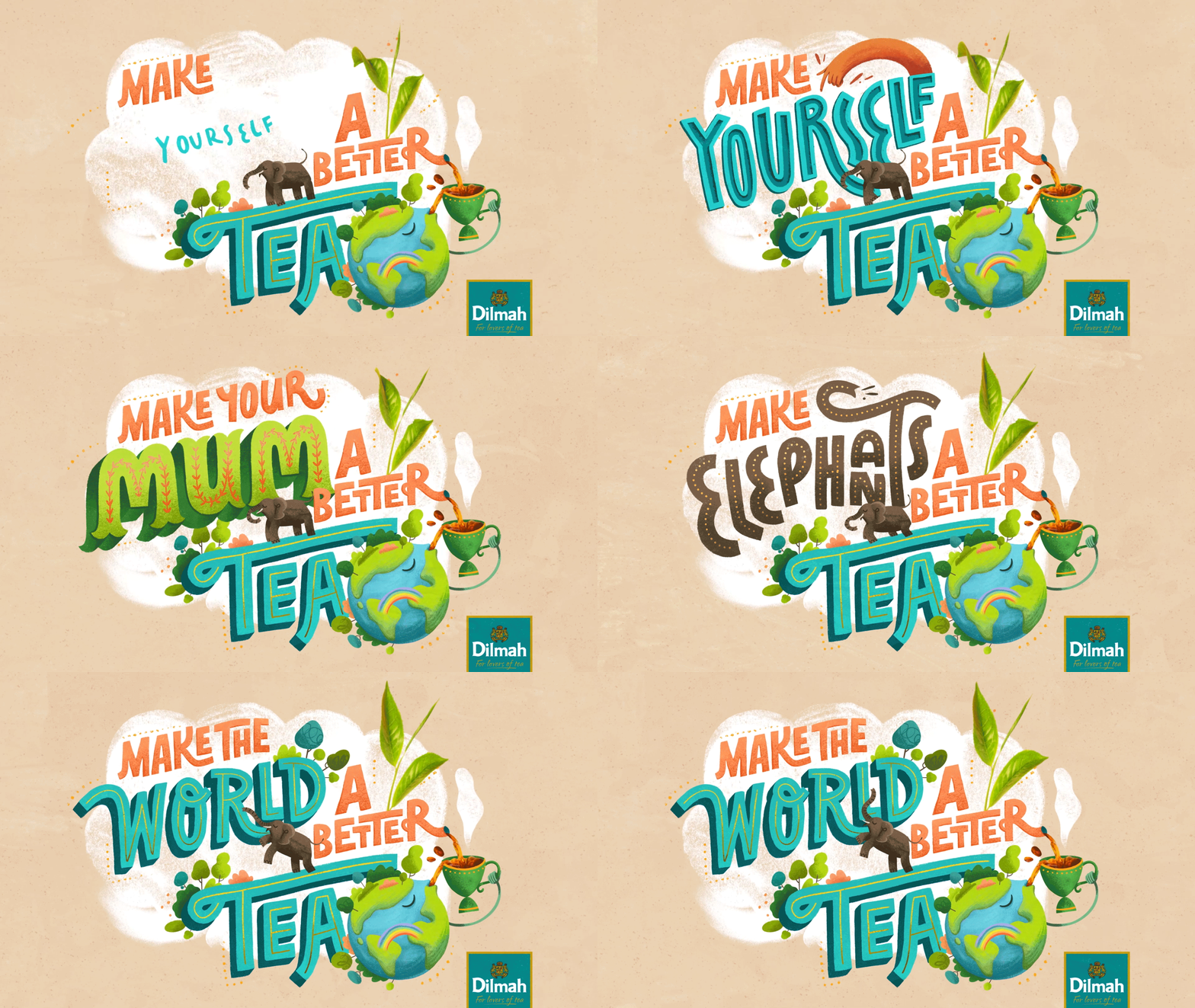
I definitely take on jobs to pay the bills. I have a mortgage, and it is definitely a part of my work. But I put more energy into the projects that I do care about, and in turn that attracts that kind of work.
Recently, I did a Children’s Bill of Rights for Mana Mokopuna (the Children’s Commissioner), which was a dream job. It’s a child-friendly version of the Bill of Rights for children in Aotearoa, and it was great just getting to meet the people who do this work and help create this joyful document that’s going to help young people understand what their rights are.
I want to be doing work that actually helps people: it’s the reason I do design. I don’t have to be paid to do work like that. I don’t have to charge for everything I do; if I’m doing work that pays the bills, then I actually have some time to do work for free or pro bono. You don’t have to be restricted by your job. We all have to work to survive and live, but how can I find those nuggets of time or projects where I put something good out there, even if it’s not for my benefit? I don’t think we can underestimate these touchpoints that we have in people’s lives.
:quality(82)/media/moana2.png)
:quality(82)/media/moana.png)
Honestly, I feel scared for the middlemen but not for the artists, as creative thinking is going to become more valuable. The way I draw a line, no one else can do that; the way I put colour into an image is because of what I’ve seen all throughout my life, and the feelings I have. For me, AI doesn’t play a part in my workflow; I don’t think it aligns with what I do or with my purpose.
I don’t love the ethical issues around it, such as mining Instagram and taking references from people’s work, because that’s people’s intellectual property — their style, their whole career — and I don’t think that’s fair. But I do think it’s going to cut out a lot of average work, which I think is ultimately going to be a good thing. The subpar illustrations that have kind of stocky vibes are going to be easy to pump out, so it’s going to force us to be more creative and to experiment with different tools and maybe even get back to using more analogue approaches, which I’ve been experimenting with a little bit myself. Right now, I’m still getting work, and I know that my voice can’t be replicated by robots … at least for now.
The thing that I’ve always struggled with is that there are so many talented creative women, but most of the creative directors I speak to and contact are men. The women who have been mentors in my life have had such a profound impact on me, and if I could also do something similar, I think that’s a life well lived. I’d be content if maybe someone could look at me and choose to pursue illustration because of it.
You have to work super hard, and that’s something I definitely want to emphasise: you have to make it your whole life and dive in. You have to produce so much work, keep pushing yourself and learning, and you can’t get complacent if you want to do this as a job. It is competitive, and people do fail, so you have to really chase after it if you want it.
You have to be constantly in the public eye, as everyone’s got their own thing going on, and you need to stay top-of-mind. The design community in New Zealand is really welcoming and supportive, and it’s not a dog-eat-dog creative industry — you don’t have to step on someone else to get ahead. I’ve had so many great illustrators pass on my name to people when they can’t take on jobs themselves.
Longer term, I would love to be a business owner in some respect, whether that is a studio-type environment or partnering up with some epic animators, packaging and motion people, or even just an illustration studio. We don’t really have one in New Zealand that’s a studio purely for illustrators. I don’t know if there’s a need for it, but maybe that’s something to look into.
I’m also potentially exploring my passion for fashion in a product-based capacity, with fabrics and apparel. In the short term, I do want to get represented in the international market. Going overseas really helped me see that we’re truly world-class in Aotearoa when it comes to design and art, but in terms of budgets and scope there are more opportunities elsewhere. I generally just feel like it’s always been what I was created to do, and it’s my responsibility to share it with people. I’m just so lucky — we’re lucky to get to do what we do.
:quality(82)/media/MM_Magazine.jpg)
The last year has been a huge one for me, both professionally and personally. 2025 was a massive year in terms of hitting some career milestones that I had been aiming for, completing 2 public murals, taking on my first major project in the Australian market, doing some epic brand collaborations, and I have just recently found out that Hooked won the Industry Awards Aotearoa Children’s Book Prize!
Working with some of my favourite public figures and brands was a fantastic experience. Key highlights include an in person pop up with Whittakers, an illustrated fishing guide with Al Brown, illustrating a suite of brand illustrations for Mana Mokopuna, a collaboration with Spark, and a bat for Women’s Cricket NZ, to name a few.
I also had the joy and privilege of welcoming my baby daughter into the world, arguably my biggest project to date haha. Its rocked my world in the best way and inevitably will change how I approach work in the future!
I feel so grateful for the incredible opportunities that came my way last year, it really felt like a leap forward in many ways. I am curious to see how things go going forward, juggling early motherhood and my career, but I do have some fun projects in the wings that I am looking forward to getting my teeth into. Watch this space!
:quality(82)/media/cricket-bat.png)
:quality(82)/media/Hookedcover.jpg)